Daymaniyat Islands SnorkelingAn Independent Guide Check Availability

Daymaniyat Islands Snorkeling

Green turtles feed in the shallows off nine uninhabited islands an hour from Muscat, and every boat that takes you there sells a slightly different day. Compare Daymaniyat Islands snorkeling trips on the four things that decide it: which marina you leave from, how long you are actually in the water, what lunch really means, and whether the reserve permit is inside the price.

Updated August 2026

  • Rated 4.6 to 4.9 on the booking platform
  • Free cancellation up to 24 hours on every trip
  • Reserve permit stated per listing
  • Traveller feedback reviewed: 5,200+ reviews

Quick answer

We currently compare nine guided snorkeling trips to the Ad Dimaniyat Islands Nature Reserve, all of them half-day boat trips out of Muscat's two marinas. Prices run from $60 to $99 per adult, the crossing takes 25 to 45 minutes depending on the boat and the port, and every trip follows the same shape: two snorkel sites, food between them, and — from November to April only — time ashore on a white-sand beach. Green turtles are the reason people book, and they are in the water all year.

Key takeaways

Daymaniyat Islands Snorkeling Trips Compared

Prices, ratings and review counts were read from the operators' own listings in August 2026 and are set by the operators, not by us. Booking, payment and cancellation all happen on the booking platform, and every trip below allows free cancellation up to 24 hours before departure. Several listings show a struck-through higher price; the figure quoted here is the one you actually pay today.

Independent tour comparison
Last price check: August 2026
Permit fees verified against Environment Authority information: August 2026
Traveller feedback reviewed: 5,200+ reviews

Marina, Time in the Water and the Permit

Two columns settle most bookings. The first is the marina, because Seeb and Al Mouj are 20 kilometres apart and a taxi to the wrong one is how people miss the boat. The second is the permit line: a cheaper fare that leaves OMR 3 per person off the bill is not always the cheaper day.

Trip Price Departs Book In the water Permit Rating
Brunch snorkeling trip $63 Varies by option Details Two stops, 4.5 hours total Not stated 4.7 (2,520)
Seeb Marina morning trip $60 Seeb Marina, 08:15 Details 3.5 hours at the reserve Included 4.7 (669)
Morning or afternoon trip $62 08:30 or 13:30 Details Two stops, 4.5 hours total Included 4.7 (321)
Catamaran with BBQ $63 Al Mouj Marina Details 2 hours, split in two Included 4.8 (10)
Beach and snorkel day $64 Al Mouj Marina, 09:00 Details 1 hour, plus 1.5 hours ashore Included 4.6 (231)
Seeb Port short trip $66 Seeb Port, 08:30 Details Two stops, 4 hours total Included 4.7 (431)
GoPro turtle and shark trip $70 Seeb Port Details Several stops, 5 hours total Included 4.8 (161)
Snorkel and kayak day $80 Al Mouj, Counter 6 Details 2.5 hours of activity Included 4.9 (92)
BBQ lunch boat $99 Al Mouj Marina Details Two stops, 4.5–5 hours Included 4.6 (773)

Ratings and review counts are the operators' own, read on the date shown. "In the water" reflects what each listing publishes about its own schedule; where a listing gives only a total duration, that is what appears here.

Live Dates and Prices

Live availability for the most-booked trip in the catalogue, straight from the booking platform. Prices on this page were last read from the listings in August 2026.

Powered by GetYourGuide

How to Choose Between Nine Almost-Identical Boats

On paper these trips look interchangeable: same islands, same turtles, same four or five hours. In practice they split into five decisions.

You want the safest bet

Take the brunch snorkeling trip at $63. It carries 2,520 reviews at 4.7, which is more feedback than the rest of this catalogue combined, and the pattern across a year of it is consistent: turtles at the first site in numbers, captains who go looking for a better spot when the first one is quiet, sandwiches and cold drinks that reviewers describe as snacks rather than a meal. The platform's own review summary says the same thing — clearer information about the food would help.

One caveat sits in the fine print. This is the only listing here that says nothing about the reserve permit, while eight others state it plainly. Budget the OMR 3 per adult, ask at check-in, and treat it as a bonus if it turns out to be covered.

Rose from the United Kingdom, July 2026: "He took us to a spot where over 15 turtles were all feasting on the coral. Plenty of snacks and drink were provided whenever you wanted. The boat even had a toilet on board."

You want the most water for the money

Two answers. The $60 Seeb Marina morning trip publishes 3.5 hours inside the reserve, the longest on-site block anyone here quotes, and it is the cheapest ticket in the catalogue. Check-in is 08:15, the boat is a 38-foot shaded launch, and it is back at the marina around 13:00, which leaves the afternoon intact.

The catamaran with BBQ publishes the most explicit swim schedule: an hour in the water, an hour and a half for lunch and the surface interval, then a second full hour in. Two hours of actual snorkeling is the highest figure on this page, and park fees and local taxes are inside the $63. The catch is the sample size — ten reviews, against 4.8. Everyone else here has hundreds.

The beach and snorkel day is the opposite trade: one hour of snorkeling, then an hour and a half on the sand between November and April. If the island landing is the point of the trip for you, that is where the time goes.

You want to come home with the footage

The GoPro turtle and shark trip includes an underwater camera in the $70, and reviewers keep bringing it up — Pamela from Taiwan, July 2026: "Really nice, you are totally free with the GoPro only for you!" Tony from the United Kingdom in April was handed a new GoPro 13 and copied the files over on the way back to port. The snorkel and kayak day works differently: the crew shoots and sends you the photos and video afterwards.

The same GoPro listing advertises odds rather than sightings — roughly 70% for blacktip reef sharks and, in season, around 50% for whale sharks. Those are the operator's own numbers, not a guarantee, and the reviews include people who saw neither and still rated the day five stars.

You are bringing children, or someone who cannot really swim

The Seeb Marina morning trip accepts children from three years old and keeps life jackets on board for non-swimmers and kids as a matter of course; the shallow sites and the short 25 to 30 minute crossing help too. The morning or afternoon trip sets its minimum age at six but offers a small-group option and two departure times, which matters if a nap decides your schedule.

At the other end, the snorkel and kayak day is the most restricted listing here: no wheelchair users, and the operator excludes people with mobility impairments, heart problems, respiratory issues, recent surgery or visual impairment. The $99 BBQ boat is the one listing marked wheelchair accessible, and it also carries the clearest pregnancy guidance — not recommended in the first trimester, medical clearance from five months, calm sea only.

You care about the boat itself

Four to five hours is a long time on a small deck, and the listings differ more here than anywhere else. The beach and snorkel day publishes a toilet, shower taps, first aid, a fire extinguisher and full shade. The catamaran has a sundeck and toilets. The $99 BBQ boat comes with toilets, showers and changing rooms at the dive centre before you even board. Smaller speedboats may carry nothing more than a marine toilet, and some carry none at all — if that matters to you, it is worth confirming before you pay, because only some listings say either way.

One more practical detail from the Seeb listings: guests pass a marina security gate and walk to the jetty, and one operator notes a dress code covering the marina area itself. Cover up between the car and the boat.

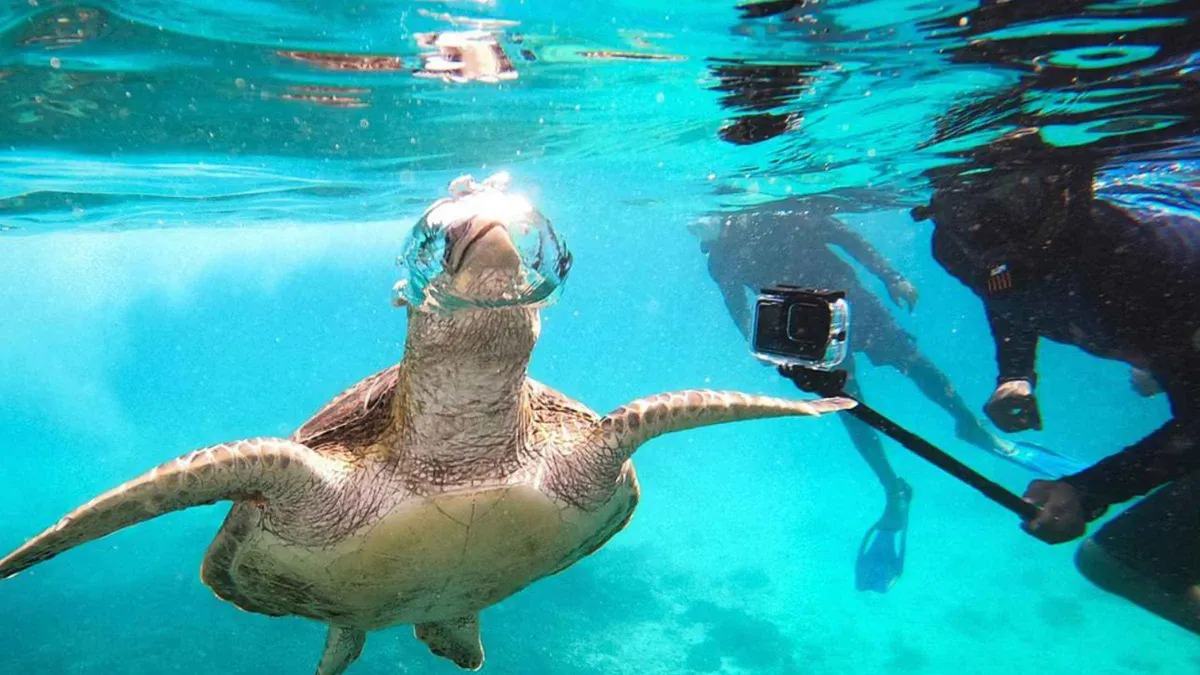
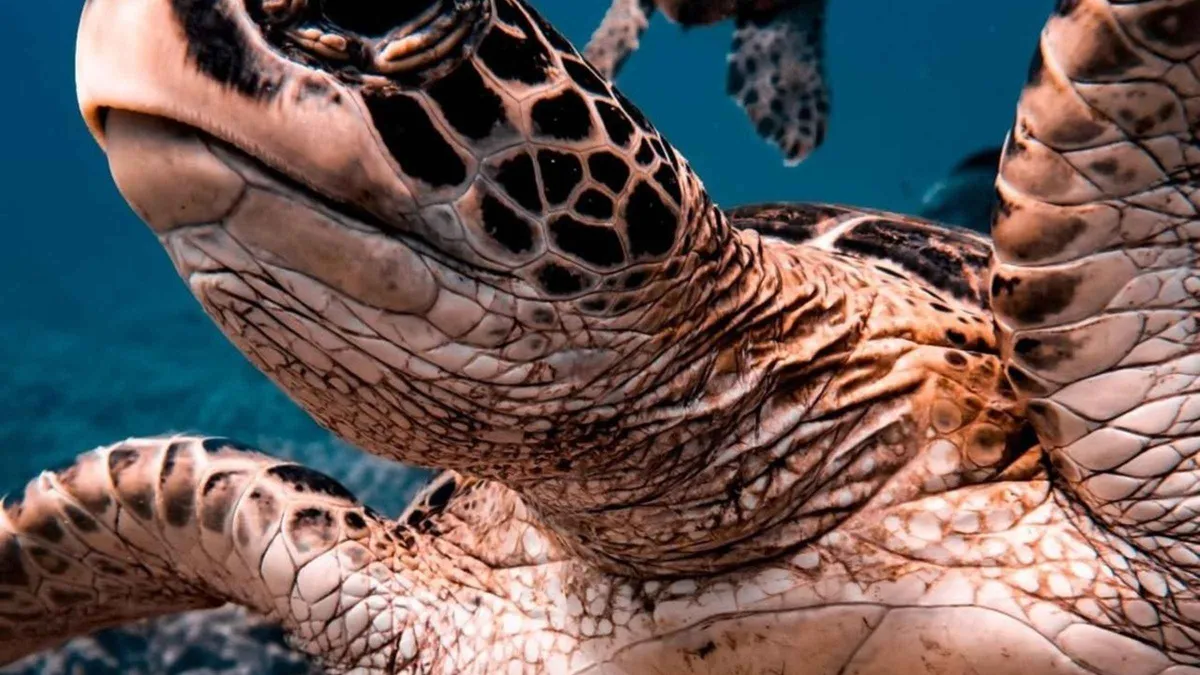
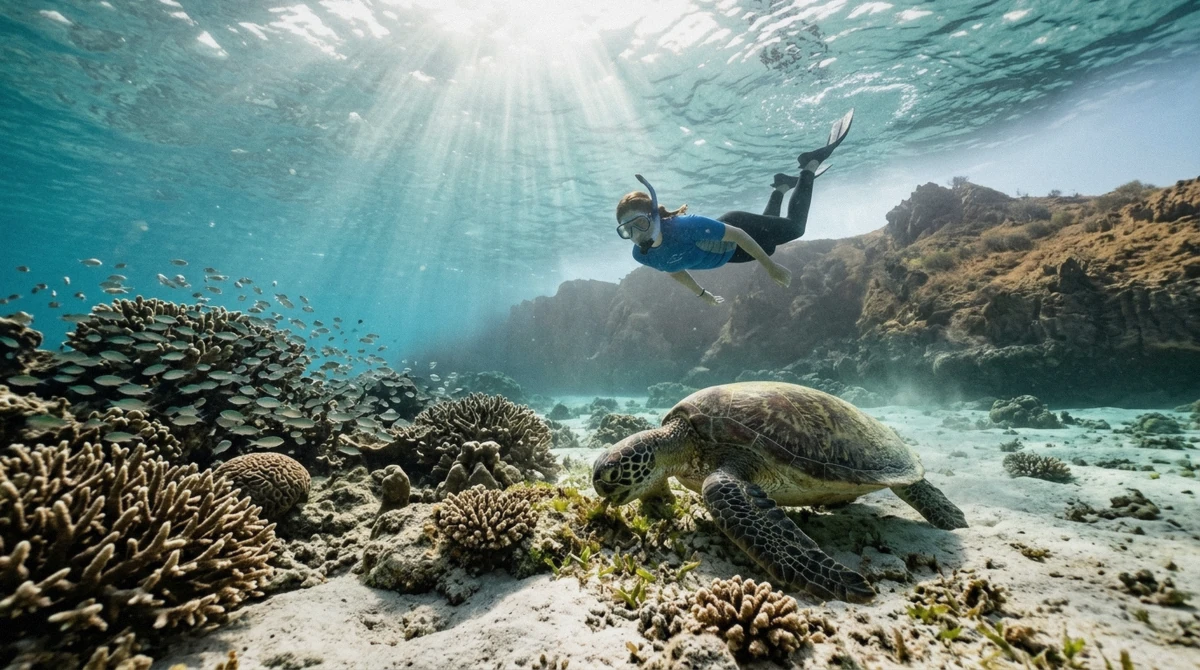
Green turtle grazing in shallow water below a snorkeler on a Daymaniyat Islands snorkeling trip in Oman
Green turtles feed on the seabed and surface for air beside the group; reviewers routinely count 15 to 30 in one session.

The Reserve Permit, and Which Trips Include It

The Daymaniyat Islands are a protected reserve, not a beach. Oman charges for entry per person per day, and it is the number most often left out of a price comparison.

What the Environment Authority actually charges

The rates are published in the Environment Authority's service catalogue and are set per person, per day. A non-Omani adult pays OMR 3 for a day visit, OMR 6 if the day includes diving, and OMR 10 if it includes an overnight stay on the islands. Non-Omani children under 16 pay OMR 1, rising to OMR 3 with an overnight. Omani nationals pay OMR 1, OMR 3 and OMR 5 respectively, with 100 baisa for children.

At roughly 1 OMR to $2.60 (rate checked August 2026), the snorkeling permit works out at about $7.80 per adult. Longer permits exist for people who keep coming back: three months costs OMR 30 and a year OMR 100.

Applications go through the Environment Authority's own electronic system and are approved instantly when the paperwork is in order. Free permits exist, but only for research, official assignments, local fishermen and government delegations — a tourist cannot apply for one.

Who pays it, and who has already paid it

On a booked trip the operator normally buys the permits in bulk and folds them into the fare. Eight of the nine listings compared here say so in writing, in slightly different words: "entry permits to Daymaniyat", "islands permits", "National Park fees", "Ministry of Environment snorkeling permits", "Ministry permit and island entry fees". They all mean the same line item.

The exception is the brunch snorkeling trip, the most-booked listing on this page. Its inclusions run boat trip, local guide, snorkeling equipment, snacks, soft drinks and sandwiches, with towels explicitly excluded — and no mention of a permit at all. That is not evidence the permit is being skipped; the reserve is patrolled and boats need clearance. It does mean the listing has not promised to cover it, so assume OMR 3 per adult until the operator says otherwise.

If you are hiring a private boat rather than booking a seat, the permit is entirely yours to arrange, in advance, through the Environment Authority.

The wider set of rules the permit buys into

The reserve was declared in 1996 and is recognised as an Important Bird Area, with breeding sooty gulls, bridled terns, roseate terns, white-cheeked terns and the sooty falcon — one of the very few migratory raptors that actually nests in the region. Camping, where it is allowed at all, is the OMR 10 permit, and only in the winter season.

The rules that reach you as a visitor are simple: no fishing, no collecting, no feeding, no touching marine life, and no landing outside the open season. Several listings print the touching ban in their own "not allowed" section, and the kayak operator asks specifically for biodegradable sunscreen.

Daymaniyat Islands Snorkeling, Month by Month

Trips run all year. What changes is whether you can stand on an island, how clear the water is, how rough the crossing feels, and which large animals are around. Water temperature is never the deciding factor here — it sits between 26 °C in winter and 32 °C in late summer, so nobody needs a wetsuit for a half-day trip.

  • JanuaryClearest water, island landings openPeak visibility, commonly 20–30 m, and the beaches are open. Winter wind can make the ride home choppy, as reviewers on the Al Mouj boats note. Bring a windbreaker for the crossing.
  • FebruaryBest all-round monthCalm mornings, cool clear water, landings and camping permitted. This is the stretch where a half-day trip most reliably delivers everything the listings promise.
  • MarchWarming up, still openSea temperatures climb, visibility holds. Weekends get busy with boats out of both marinas, so the earliest departure is worth the alarm clock.
  • AprilLast month ashoreIsland access ends on 30 April. If beach time and the short island hike are part of what you are buying, this is the deadline.
  • MayNesting closure beginsFrom 1 May no boat may land. Snorkeling, diving and swimming from the boat continue exactly as before, and operators simply run a second snorkel session instead of the beach stop.
  • JuneWarm, breezierWater is bath-warm and the summer wind pattern starts. Sea state cancels more departures than at any other time of year; operators reschedule rather than refund where they can.
  • JulyWhale shark season opensPlankton blooms bring whale sharks into the area. Crews will detour to look, which lengthens the crossing. Bluebottle jellyfish also turn up on some wind directions.
  • AugustPeak whale shark oddsThe most reliable month for a sighting, and still not guaranteed. Water can reach 32 °C, which is warm enough that a rash guard is about sun, not cold.
  • SeptemberWhale sharks, improving clarityThe sea begins to cool slightly and visibility improves while the big fish are often still around. A strong compromise month.
  • OctoberQuiet, closure still onSightings taper off and the islands remain closed to landings until the end of the month. Water clarity is on the way back up.
  • NovemberIslands reopen on the 1stLandings, beach stops and camping resume on 1 November. Comfortable air temperatures and the start of the best visibility window.
  • DecemberCool, clear, popularHigh season for visitors to Oman. Book a few days ahead, especially for the morning departures, which are the calmest and the ones crews prefer.

Seasonal access dates are the reserve's own and appear in the operators' listings. Visibility and temperature ranges come from Oman dive-centre reporting, checked August 2026.

Turtle Nesting Season and What Closes

One rule shapes the whole calendar, and it is the single most common misunderstanding about a Daymaniyat trip.

Snorkeling never stops. Landing does

From 1 November to 30 April, boats may land: you get beach time, a short walk up to a viewpoint, and on some trips a camping option. From 1 May to 31 October, the islands are closed for green and hawksbill turtle nesting and for breeding seabirds. No landing, no beach stop, no camping.

What continues through the closure is everything that happens in the water. You still snorkel two sites, still swim from the boat, still cruise the reserve. Operators simply reallocate the time: the beach and snorkel day states outright that in summer the beach hour and a half becomes a second snorkeling session with a half-hour break between the two.

So the summer question is not "is it worth going" but "do I care about standing on an island". Several first-hand accounts from people who did land in winter describe it as the least memorable twenty minutes of the day.

Camping, and why it is a different permit

Overnight stays are a winter-only proposition and require the OMR 10 permit rather than the OMR 3 day permit. Independent write-ups describe rows of tents already pitched on the sand and bioluminescence in the shallows after dark, which is the part that sells it. They also describe the tents being pitched very close together on group trips, so it is rustic rather than private.

None of the nine trips compared here is a camping trip. If that is what you want, it is a separate booking with an operator that runs them, and the season is short.

What You Actually See Down There

The Daymaniyat reef is not a Red Sea coral garden and it is honest to say so — several first-hand accounts describe the coral as unremarkable. The animals are the reason the trips sell out. Here is what turns up, and where.

  • Green turtles

    Feeding on the seabed at the main turtle site, year-round, in groups
  • Hawksbill turtles

    Less common in the water; they nest on the beaches in summer
  • Blacktip reef sharks

    Cruising low near the seabed at the second site, harmless
  • Whale sharks

    Open water off the islands, July to September, never promised
  • Blue-spotted rays and stingrays

    On sand patches between coral heads
  • Zebra sharks and moray eels

    Reported by divers and the occasional lucky snorkeler
  • Parrotfish, angelfish and reef schools

    Everywhere over the hard coral, at both sites
  • Dolphins

    Bow-riding on the crossing, most often on the return leg

Compiled from the operators' listings and recent traveller reports, August 2026. Sightings of anything larger than a turtle are luck, not itinerary.

Getting There: Two Marinas, No Ferry

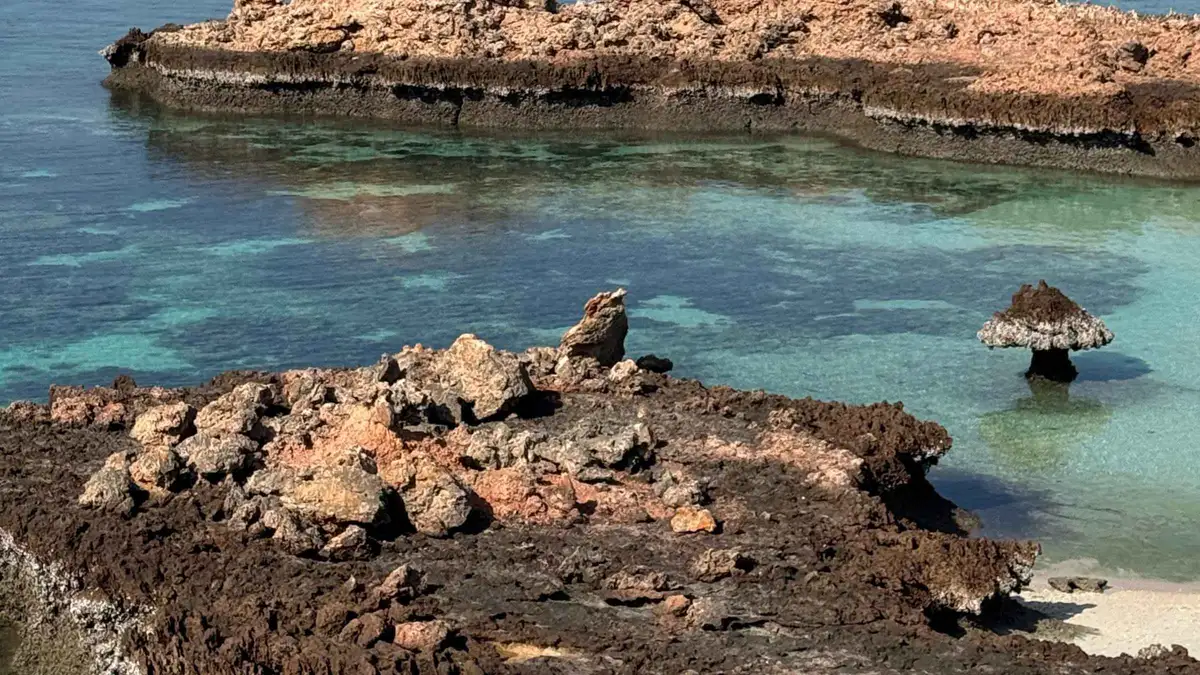
The nine islands add up to about 100 hectares of limestone and sand, sitting roughly 18 km off the coast at Barka and about 70 km west of Muscat city. Depending on the marina, the crossing runs 30–45 minutes. Every trip on this page starts at one of two places, and they are not near each other.

Seeb Marina and Seeb Port

Seeb is the closer departure to the islands and the shortest crossing quoted by anyone here: 25 to 30 minutes. The morning trip checks in at 08:15 inside the marina, past a security gate and along the jetty where the boats are moored. The Seeb Port short trip departs at 08:30 with boarding from 08:10, and the GoPro trip also leaves from Seeb Port.

Seeb is about 30 km from central Muscat, a 25 to 30 minute drive, and independent write-ups report free parking at the marina. The GoPro trip is explicit that transport to the departure point is not included.

Al Mouj Marina

Al Mouj is the newer marina inside the Muscat city stretch, and four trips leave from it: the $99 BBQ boat, the catamaran, the beach and snorkel day and the kayak day. The crossing from here is longer at about 45 minutes. Meeting points are specific — two blue containers with marine decoration at the MolaMola centre, the MARMAR office, Counter No. 6 — which is more useful than it sounds when the marina is busy.

One warning worth repeating, because a reviewer on a Global Scuba trip hit it in June 2026: the voucher listed Al Mouj while the boat actually left from Seeb, and the fix was a second taxi and a lot of stress. Where a listing says "meeting point may vary depending on the option you select", read the voucher the night before rather than the morning of.

Why there is no public ferry

There is no public ferry and no bus to the Daymaniyat Islands, and there never has been. The reserve is access-controlled: you either book a seat on a licensed boat or take a private boat with a permit you applied for yourself. Search results for a "Muscat to Daymaniyat ferry" are describing tour boats.

Without a rental car, a taxi to either marina is the practical answer. Muscat's public transport does not usefully reach Seeb Marina, and pickup is excluded on most listings here — the Seeb Port short trip offers it at extra cost, and no trip on this page includes it in the fare.

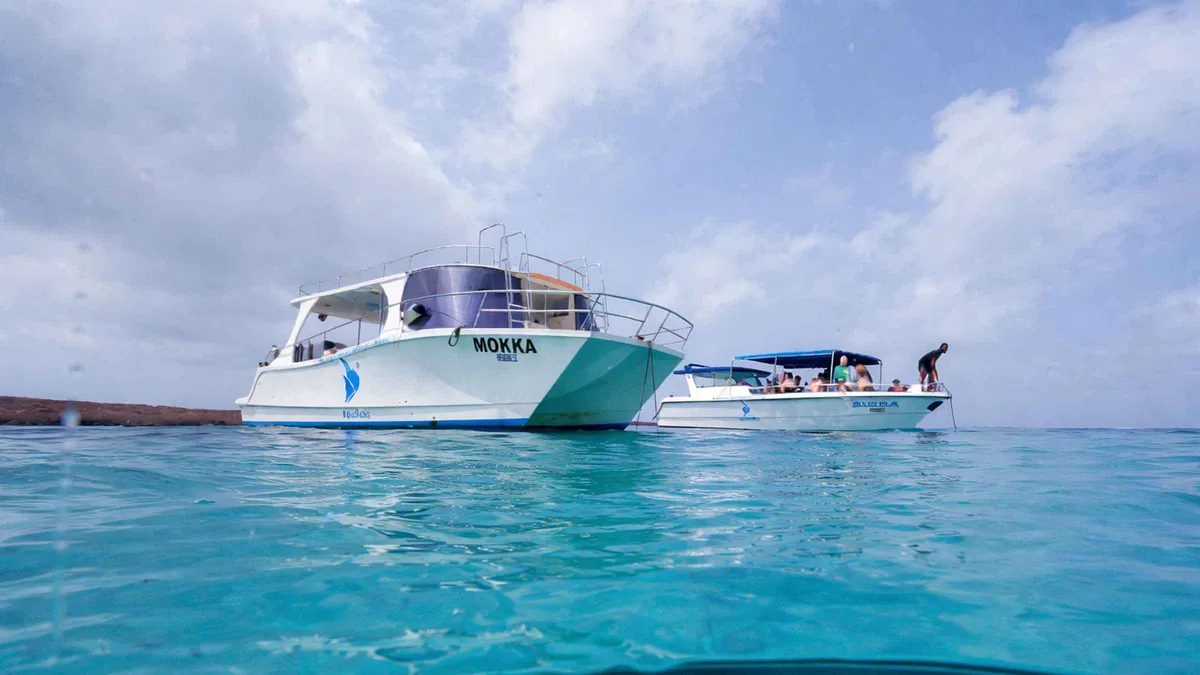
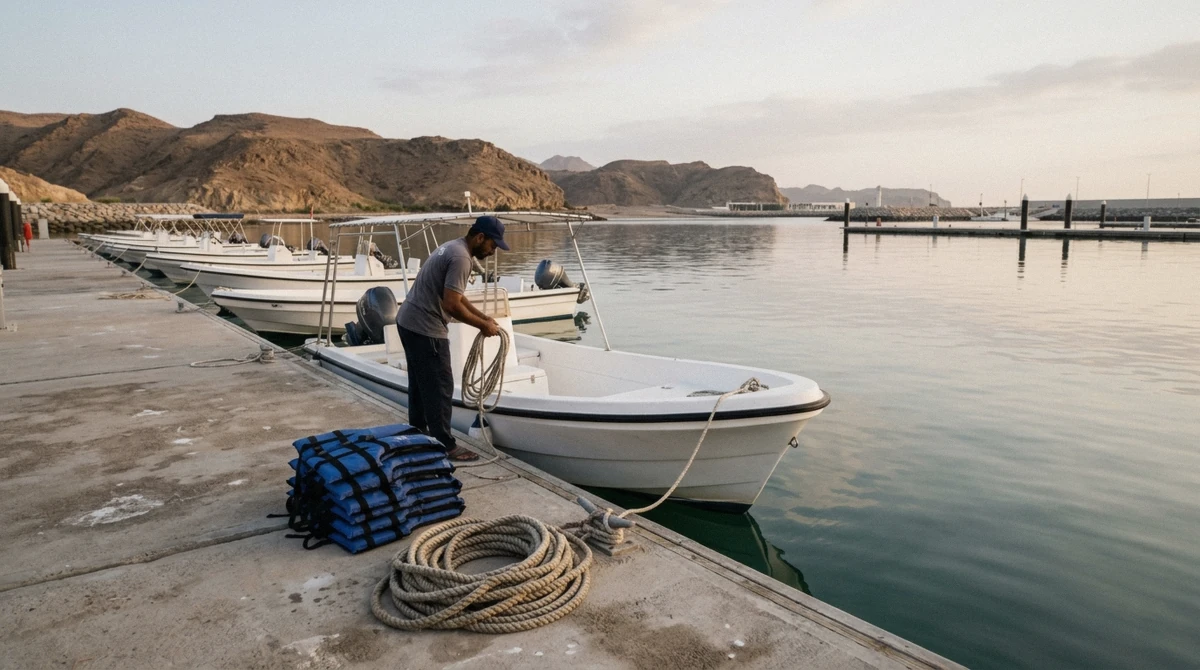
Snorkeling boats moored at a Muscat marina before a Daymaniyat Islands snorkeling trip in Oman
Seeb sits closest to the islands, Al Mouj adds about fifteen minutes each way. Check which one is on your voucher.

How a Half-Day Trip Runs

In winter a standard trip is three stops — a turtle site, a shark site and an island landing — and in summer the landing becomes a second swim. The shape of a four-and-a-half-hour day, taken from the published itineraries of the Seeb and Al Mouj listings.

  1. 08:15

    Check-in at the marina

    Pass the security gate, find the operator's office or counter, sign in and get the safety and conservation briefing. Gear is fitted here on most trips.

  2. +30 min

    The crossing

    25 to 30 minutes from Seeb, about 45 from Al Mouj. Keep sunglasses and hats secured — the boats move fast. Dolphins often appear on this leg.

  3. +1 h

    First site: the turtles

    The longest stop, usually about an hour. You enter from the boat and the action starts within roughly 10 m. Life jackets and floats are available to anyone who wants them.

  4. +2 h

    Food and the surface interval

    Sandwiches, fruit, chips, juice and water on deck while the crew repositions. On the two BBQ boats this is a cooked lunch and runs closer to 90 minutes.

  5. +2 h 30

    Second stop: sharks, or the beach

    Between November and April this is often the island landing, 20 minutes to an hour and a half. From May to October it is a second snorkel site instead, typically the blacktip shark spot, where there is a light current.

  6. +4 h 30

    Back at the marina

    Boats are usually alongside by early afternoon; the Seeb morning trip is back around 13:00. Crews on the GoPro and kayak trips hand over photos and video before you leave.

Water, Wind and Visibility

Oman's snorkeling season is not defined by temperature. It is defined by plankton, wind and what the crossing feels like.

Visibility and temperature

The clearest water runs from October through May, when there is less plankton in suspension and visibility commonly reaches 20–30 m. Summer plankton blooms cut that back, which is the same reason the whale sharks turn up: the water gets murkier because there is more in it to eat.

Water temperature moves between about 26 °C in winter and 32 °C in late summer. No wetsuit is needed on a half-day trip in either season. A long-sleeved rash guard is the more useful item, because it handles four hours of Gulf sun, the reef-safe sunscreen expectation, and the occasional jellyfish at the same time.

Wind, swell and cancellations

Summer brings a stronger wind pattern and rougher crossings, and it also pushes bluebottle jellyfish onto some sites depending on the direction. Winter is calmer overall, though reviewers on the Al Mouj boats describe choppy returns in January when the afternoon breeze fills in.

Every operator here reserves the right to cancel or move a departure for sea conditions, and the kayak listing says so outright. Independent accounts describe trips being rescheduled to the next day rather than cancelled outright, which is worth knowing if you have one spare day in Muscat rather than none. Morning departures are the calmest and the ones crews use when they are hunting whale sharks; afternoon departures are quieter on the water and finish near sunset.

Booked Seat, Local Cash Deal, or Private Boat?

There are three ways to get on a boat here, and they price very differently.

What each one costs

A booked seat through the platform, which is what this page compares, runs $60 to $99 per adult with free cancellation and the permit usually inside the fare.

Arranging it locally in cash is the cheaper route on paper. Independent travellers surveying operators in Muscat report group trips quoted at 22 to 30 OMR per person, roughly $57 to $78 — overlapping with the booked prices rather than undercutting them dramatically. Prices vary with boat size more than with anything else.

A private charter is quoted at around 250 OMR, about $650, for the boat. That is poor value for two people and good value for eight, which is the calculation most groups end up doing.

What the extra money actually buys

Boat size, and therefore crowding. First-hand accounts of the islands agree on one thing above all: the difference between a good day and a mediocre one is how many other boats are at your snorkel site. A 14-passenger boat that runs the itinerary in reverse order — sharks first, turtles second — can have both sites almost to itself while the larger boats stack up in the usual sequence.

The second thing is behaviour in the water. One widely read account describes arriving at the turtle site alone, then watching a second boatload arrive and start touching the turtles while their guides told them not to. Smaller groups make that less likely, and it is a reasonable thing to ask about before booking.

What you cannot buy at any price is a sighting. The turtles are close to a sure thing; the whale sharks are not, in any season, on any boat.

Is It Worth It, and Who Is It For?

Two honest answers, because the trip is not universally brilliant and the reviews say so.

Yes, if you came for the animals

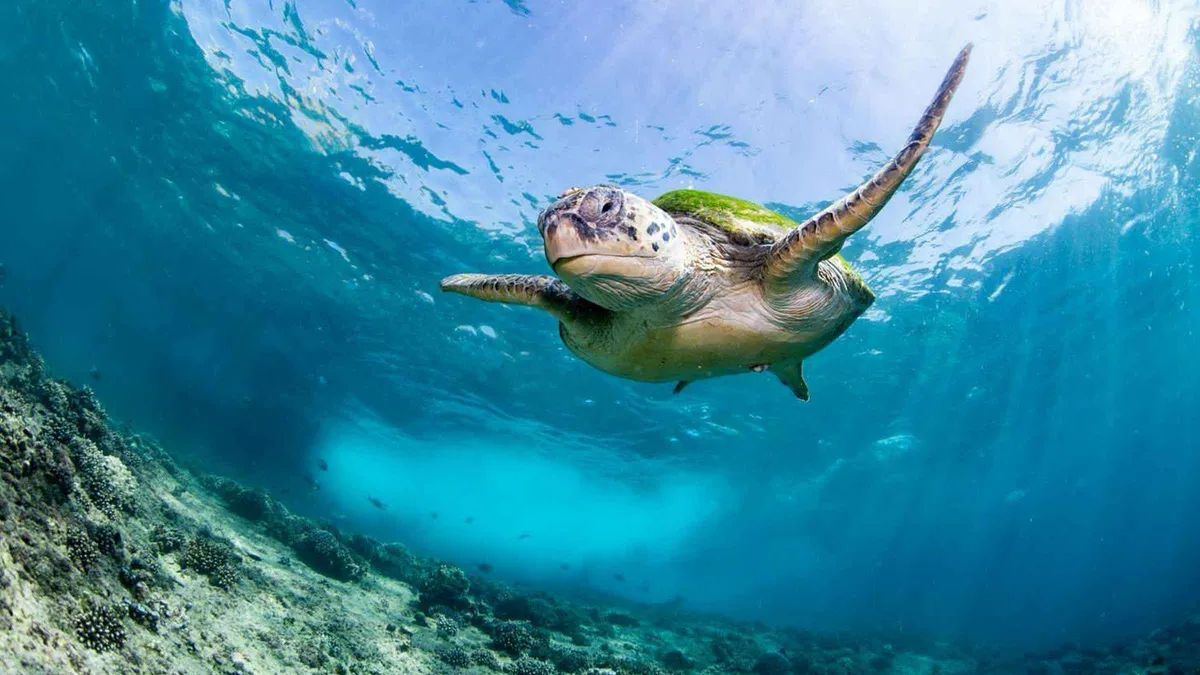
This is one of the easiest places in the world to snorkel with green turtles in numbers. Not one or two, briefly, before they leave — accounts from repeat snorkelers describe 15 to over 40 in a session, feeding on the seabed, surfacing for air beside the group and showing no particular concern about people. Blacktip reef sharks at the second site are close to routine. That combination, twenty-five minutes from a marina you can drive to from central Muscat, is the whole case for the trip.

Sarah from Germany, July 2026, on the brunch trip: "Cool snorkeling spots, huge colorful corals, lots of fish and, of course, a huge number of turtles — there were definitely 30 of them in one spot."

Less so, if you came for the coral

The reef is not the draw. Experienced snorkelers describe the coral here as not particularly noteworthy — not very colourful, not elaborate — and the honest version is that you are paying for wildlife density, not reef spectacle. If the Red Sea or Raja Ampat is your reference point, adjust.

The other recurring complaint in the reviews is food. Several listings promise "lunch" and deliver sandwiches, chips and fruit; the platform's own AI review summaries flag it on two separate trips. If a proper hot meal matters, that is what the $99 BBQ boat and the catamaran are actually selling.

Swimmers, non-swimmers and divers

You do not need to be a strong swimmer. You enter from the boat, the action is within about 10 m, and every operator carries life jackets, with floats and noodles on several. There is a light current at the shark site, and fins genuinely help there; at the turtle site there is usually none.

Divers are a different booking. Scuba at the islands carries its own permit rate — OMR 6 rather than OMR 3 — and the dive centres running these snorkel trips sell dive days alongside them. If you are combining, note the flying rule the MolaMola listing prints: allow 12 to 18 hours after any dive, including a try-dive, before you get on a plane.

What to Bring, and What the Boats Do Not Give You

Gear is provided on every trip here. Three things routinely are not: towels, sunscreen and a dry change of clothes.

The short list

Towels are excluded on the brunch trip and the kayak day, and unmentioned on most of the rest, so bring one. Sunscreen is on every "what to bring" list and on nobody's inclusions — make it reef-safe or biodegradable, which the kayak operator asks for by name. Swimwear under your clothes saves a changing-room queue, and a change of clothes for the ride home is worth the bag space.

Add a long-sleeved rash guard, a waterproof phone pouch, and in winter a windbreaker for the crossing — a February reviewer recommends exactly that. Nobody needs a wetsuit.

On-board toilets are not universal. The bigger boats publish them; the smaller speedboats often do not mention them either way. If four hours without one is a problem, book a listing that states it.

Rules that are actually enforced

Touching marine life is banned and printed in the "not allowed" section of several listings. So are fishing, feeding animals, collecting anything, alcohol and drones. The reserve is patrolled, and the operators lose their access if their guests misbehave — which is why crews intervene.

The marina itself has a dress code on at least one operator's account: fully covering clothing before and after the trip. Swimwear is fine on the boat and in the water; walking through the marina in it is not.

What Travellers Said

He took us to a spot where over 15 turtles were all feasting on the coral — it was incredible to see so many. Plenty of snacks and drink were provided whenever you wanted. The boat even had a toilet on board. Good value for money.
Rose · United Kingdom · July 2026 · brunch snorkeling trip
We were taken to 2 different snorkeling spots and there was so much sea life to see, including turtles and blue spotted rays. Jumping off the roof of the boat was definitely a highlight too.
Ahmed · United Kingdom · June 2026 · BBQ lunch boat
A small issue with the booking: on my reservation the meeting point was listed as Al Mouj Marina, while the meeting was actually at Al Seeb Harbor. I had to take another taxi. A lot of stress, but everything worked out well.
Malika · France · June 2026 · morning or afternoon trip
Always take the morning trip, not the afternoon one — the weather will always be better. Rent the GoPro if you don't have one. We should have moved at 8:15 and stayed till 9, which affected our timing at the island.
Peter · United Arab Emirates · May 2026 · Seeb Marina morning trip
Everything worked out great, it was wonderful. Very well organized, all the gear was ready in a labeled bag. Unfortunately the big fish didn't show up, but that's nature.
Verified traveller · Switzerland · November 2025 · catamaran with BBQ
They told us the sea was a little rough and asked if we still wanted to go. We went and the captain was excellent. They took us to a spot to swim with the turtles and then we spent an hour on a beach.
Carol · Italy · March 2026 · Seeb Port short trip

Reviews as published on the booking platform, quoted with the reviewer's first name, country and month, including the critical ones. Nothing here is solicited or edited beyond length.

Daymaniyat Islands Snorkeling Questions
Can you snorkel at the Daymaniat Islands?

Yes, year-round, and it is the main reason boats go. The name is spelled Daymaniyat, Daymaniat, Dimaniyat and Ad Dimaniyat depending on who transliterated it; they are all the same nine islands. The reserve closes its beaches to landings from 1 May to 31 October for turtle nesting, but snorkeling, swimming and diving from the boat continue right through the closure. Every trip compared here is a snorkeling trip with two sites; the $60 Seeb Marina morning trip publishes the longest time inside the reserve at 3.5 hours.

Is the Daymaniyat Islands trip worth it?

For the wildlife, yes — this is one of the most reliable places anywhere to snorkel with green turtles in numbers, plus blacktip reef sharks at the second site. For the coral, less so: experienced snorkelers describe it as unremarkable. Reviews also flag "lunch" that turns out to be sandwiches on several trips. The honest version Full write-up: is Daymaniyat snorkeling worth it.

How much does a Daymaniyat Islands snorkeling tour cost?

Booked seats in this catalogue run $60 to $99 per adult. Arranging it locally in cash is typically quoted at 22 to 30 OMR (about $57 to $78), and a private charter is around 250 OMR, roughly $650 for the boat. Add the reserve permit at OMR 3 (about $7.80) per adult unless your listing states it is included. Permit detail Full cost breakdown: what a Daymaniyat trip costs.

Do I need a permit to visit the Daymaniyat Islands?

Yes. The Environment Authority charges OMR 3 per non-Omani adult for a day visit, OMR 6 with diving and OMR 10 with an overnight stay; children under 16 pay OMR 1. On a booked trip the operator usually buys it for you — eight of the nine listings here say so, and the most-booked brunch trip does not mention it at all. Who includes it

How do I get to the Daymaniyat Islands from Muscat?

By tour boat from Seeb Marina or Seeb Port, about 30 km and a 25 to 30 minute drive from central Muscat with free parking, or from Al Mouj Marina inside the city. The crossing takes 25 to 30 minutes from Seeb and about 45 minutes from Al Mouj. There is no public ferry and no bus. Marina by marina Full directions: getting to the islands from Muscat.

When is whale shark season at the Daymaniyat Islands?

Roughly July to late September, with August the most reliable month and sightings tailing into October. They are never guaranteed, the fare does not change in season, and crews will spend part of the crossing looking. One operator advertises about a 50% chance in season and around 70% for blacktip reef sharks — its own figures, not a promise. Month by month More: best time to snorkel the Daymaniyat Islands.

Can you stay overnight or camp on the islands?

Only between 1 November and 30 April, and only on the OMR 10 permit rather than the OMR 3 day permit. None of the nine trips compared here is a camping trip. Independent accounts describe tents pitched close together and bioluminescence in the shallows after dark. Season rules More: island access and camping.

Is the snorkeling suitable for beginners and weak swimmers?

Yes. You enter from the boat and the wildlife is within about 10 m, so distance swimming is not required, and every operator carries life jackets, with floats on several boats. There is a light current at the blacktip shark site where fins help. Children are accepted from three years on the Seeb Marina trip and from six on the morning or afternoon trip. Who it suits

What should I bring on a Daymaniyat snorkeling trip?

A towel (excluded on several listings), reef-safe sunscreen, swimwear worn under your clothes, a change of clothes, and a windbreaker in winter for the crossing. Snorkeling gear and life jackets are provided on every trip here. No wetsuit is needed — the water sits between 26 °C and 32 °C. Full list

Which island has the best snorkeling in the reserve?

Boats do not sell named islands, they sell sites, and the crew picks two on the morning's visibility and swell. The consistent pattern is one turtle site over seagrass and one blacktip shark site, with the biggest island used for the beach landing in winter. Reports from divers put the best coral along the north-eastern bay and the turtle grazing on the south-western seagrass beds. What is down there

Ready to get in the water with the turtles?

Free cancellation up to 24 hours before departure on every trip compared here.

Check Availability
Tours from $60 Check Availability